

This is the most basic email marketing campaign. A one-time campaign to your lists that can be sent manually (window pop-up) or scheduled with cron. As with all campaigns, you may set triggers on one-time campaigns, apply filters and use a custom sender profile.
Autoresponders, Drip email campaigns, Campaign series and Date-triggered campaigns are types of recurring campaigns.
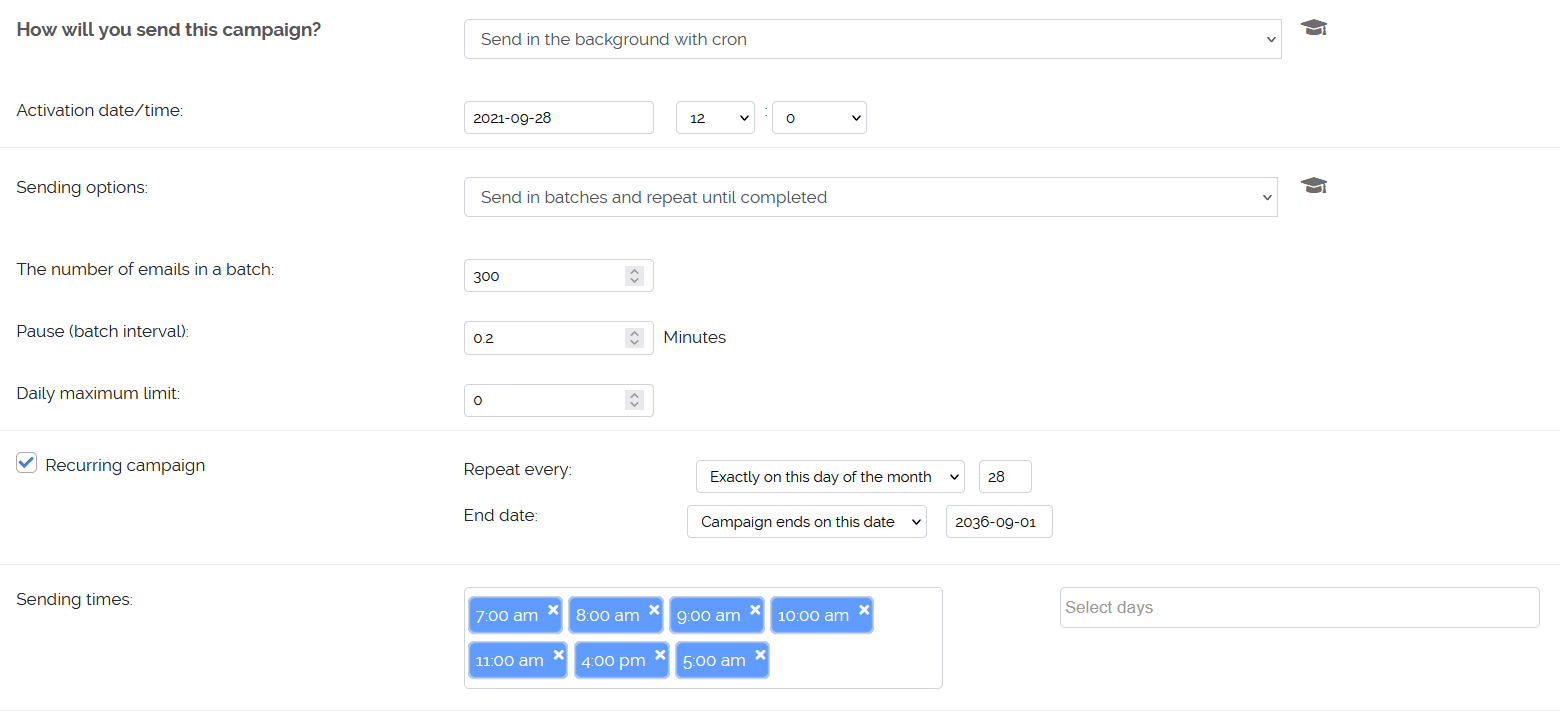
Such campaigns run periodically at given intervals. You can create campaigns that repeat daily or every X days, weekly or every X weeks, monthly on an exact day of the month. E.g. every 21st, every last day etc.
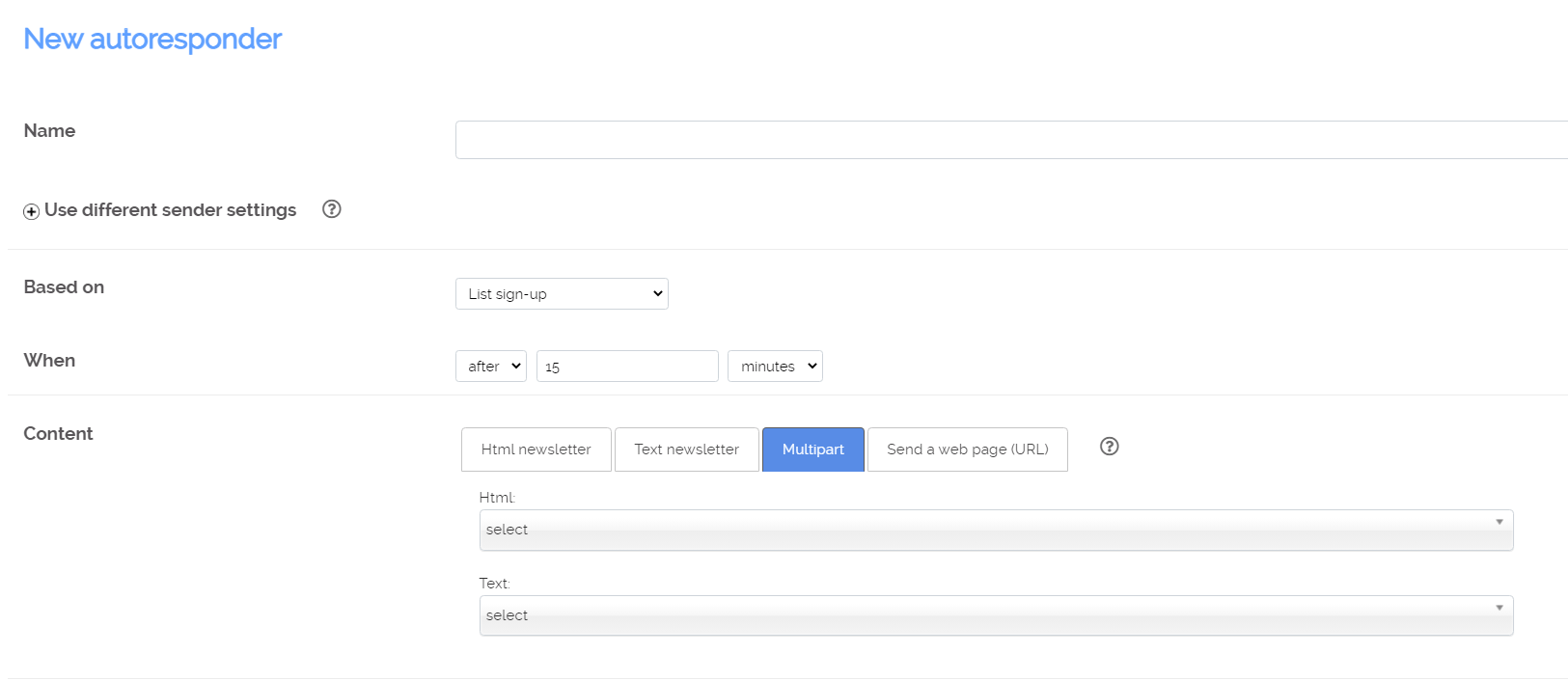
This is one of the most popular types of email marketing campaigns. Autoresponders is a special type of recurring campaigns and an ideal way of following-up with a sequence of emails at predefined intervals.
The most classic example is after a list sign-up where you want to follow-up with a series of emails in the next minutes (hours or days).
Examples: 5 emails sent 3 days apart or X emails sent at 20min, 2 hours, 2 days, 1 week and so on.
You can read more about autoresponders here.
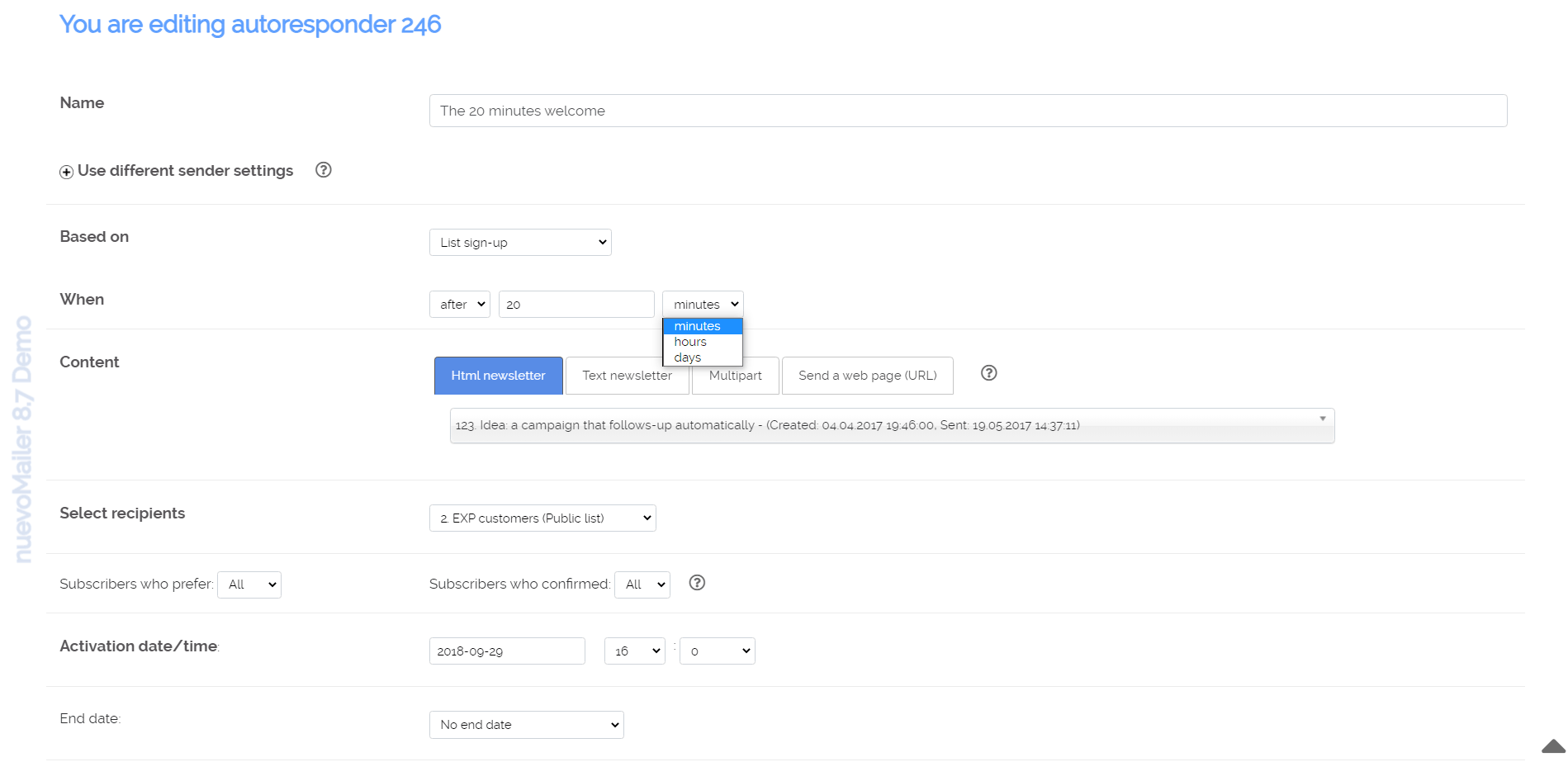
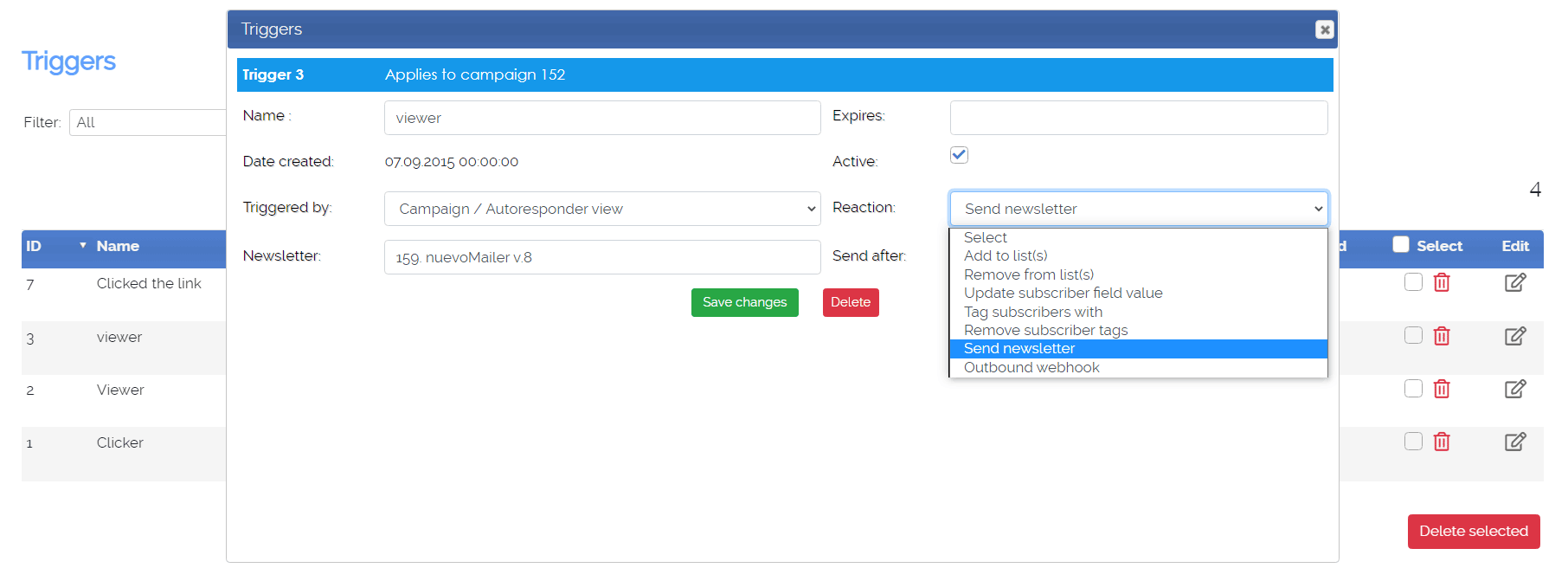
There are two ways to create drip email campaigns which can optionally be combined.
1. By creating a series of autoresponders which is the most commonly used case.
2. Using email triggers. In this case every next email depends on whether there was an action (click/view) on the previous one. They are more appropriate for more selective targeting. More.
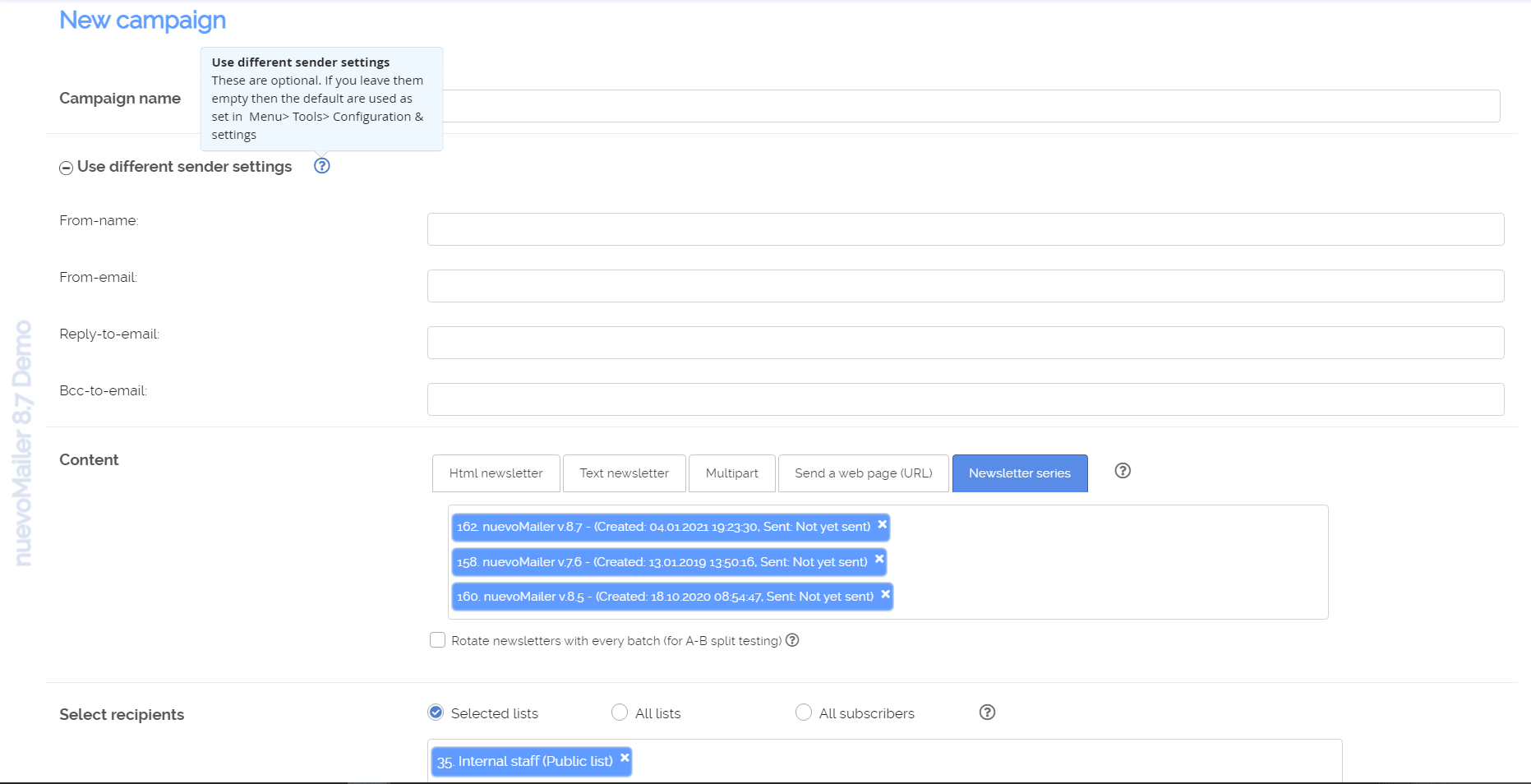
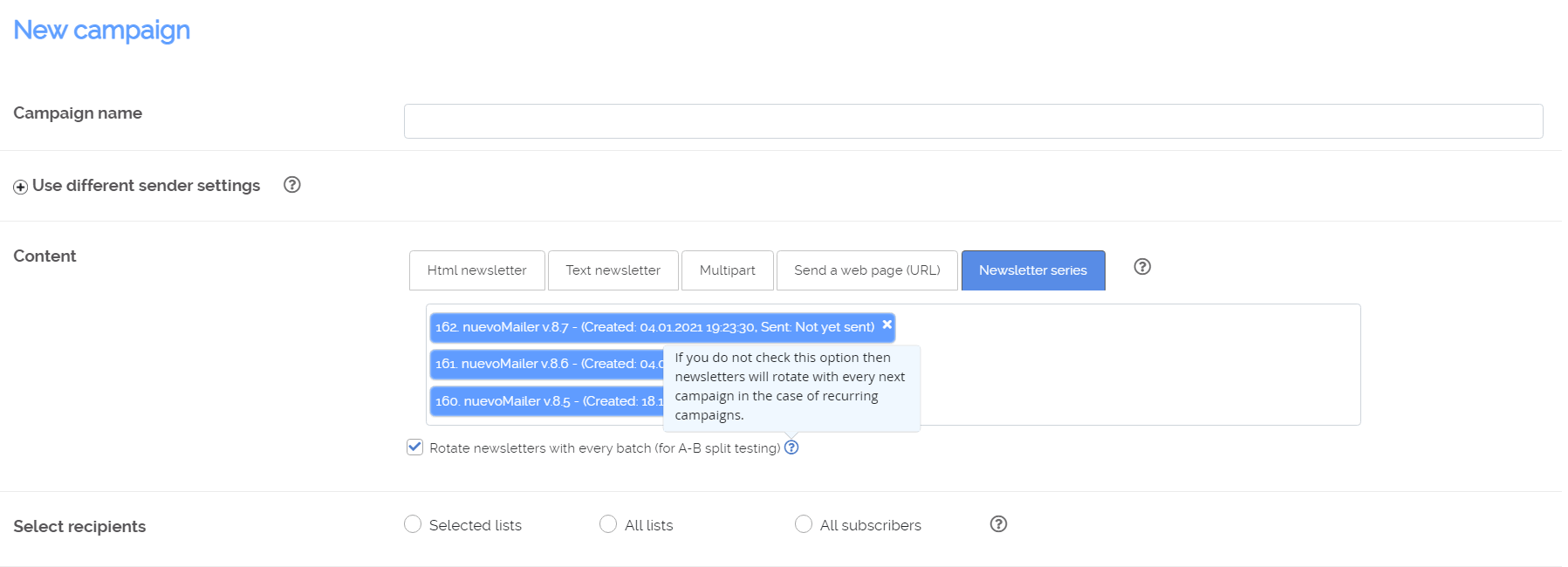
In this case you send a series of newsletters that will rotate forever (unless you give an end-date). Every next campaign will send the next newsletter in the series.
It is very useful for delivering a series of tutorials, tips or other content in the periods you want (daily, every x days, weekly etc).
It is also a very good email marketing tactic for the life-cycle management of your lists. Example:
It is usually the first autoresponders and trigger emails that you will use to grab your subscribers attention and drive engagement.
So you will meticulously plan your first follow-up emails (several minutes, hours, days later).
If you achieve your objective you can use triggers to add/remove the subscriber to/from the list(s) you want. If not you can add the subscriber in another list and create a campaign series for this list. You could use a filter so that this campaign series picks subscribers X days after their subscription. Just load some newsletters and let them recycle weekly, monthly (every few days or any period you want).
Newsletter rotation with recurring campaigns is optional. Alternatively you can use one newsletter in a recurring campaign and change it just before the next campaign starts by editing the campaign. This approach is typical for those publishing newsletters on longer cycles (weekly, monthly etc).
Anniversaries, birthdays, weddings, visit dates etc
These are based on custom subscriber fields that are defined as dates.
Especially the collection of birthdays is greatly facilitated in nuevoMailer. There is a notification in your home page when you have subscribers with birthdays. You also have a cron script that notifies you with every day's birthdays (same day or x days before).
You can automate and send anniversary and happy-birthday email campaigns before, after or on the same day of the event. See it.

You can create follow-ups based on a specific action (clicks-views activity) or as a response to a specific event (autoresponder on list sign-up) or based on a date event (see date-triggered campaigns above).
You can design campaigns that follow-up automatically only with the subscribers who do not click nor open. This is achieved with triggers. You can even use a different newsletter with every next campaign. Learn how.
In addition, again by using triggers on a recurring campaign you have additional options to follow-up with subscribers who do not click/open.
Such a trigger is: upon click/view remove the subscriber from the list. Since the triggers are inherited to the child campaigns, subscribers who click or open are excluded from the every next campaign.
You may also set an end-date for this campaign, so you can plan in advance how many campaign rounds you want to send.
To take this a step further you can even send different newsletters with each follow-up campaign by using a newsletter series.
Similarly you can follow-up with those who clicked / opened. Either on an individual basis (with email triggers) or automatically by using a trigger that puts them on another mailing list for which you have set another recurring campaign (or some autoresponders).
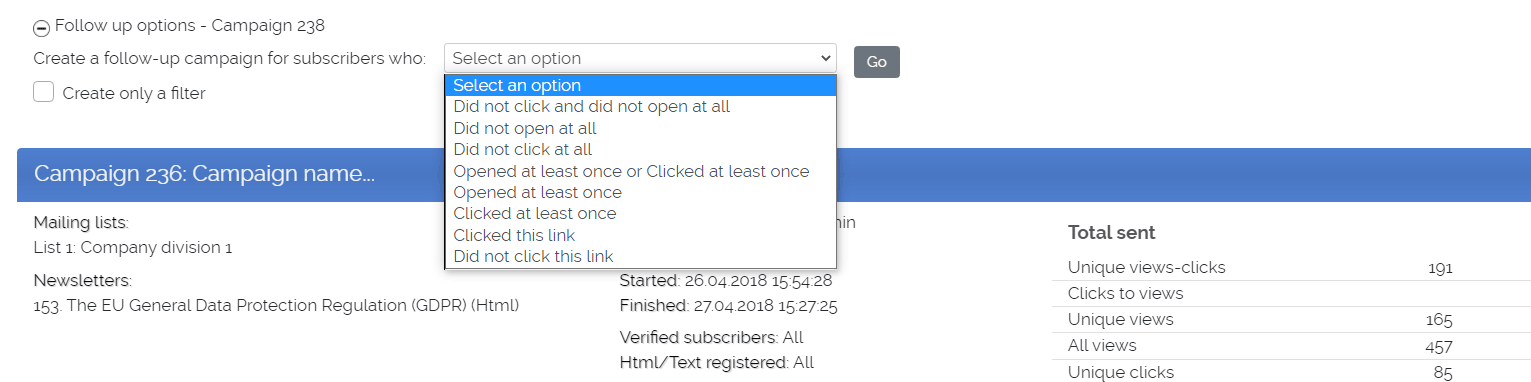
You can also create follow-up campaigns manually on a one-time basis. From your summary report you can create one-time follow-up campaigns for subscribers who opened (or not), clicked (or not) in a campaign.
Any newsletter can be used in any campaign with any mailing list or a selection of lists.
You can send an html newsletter or a plain text newsletter or both merged as multipart.
When you send an html newsletter there is an option to automatically add a text part with a link to read the html version in your browser. So effectively it becomes multipart and this means better deliverability (lower spam rate).
You can embed RSS feeds in a newsletter. This is done simply by typing this inside a newsletter:
[rss]http://feed-url[/rss]
You can grab and send a web page as a newsletter by giving the URL and a subject for the email. In addition, you may add attachments and append an opt out link.
You can do A/B split tests with one-time campaigns. You can select a number of newsletters and these will rotate with every batch.
After some rounds you can see statistics about each newsletter. Which one received most clicks and views.
You can then edit your campaign and choose the one you want. Or you can just let them rotate. Learn more.

nuevoMailer is a self-hosted email campaign software loaded with features and utilities to help you design, manage and send highly targeted email campaigns.
You can set a daily campaign maximum limit. This enables you to spread a campaign across several days. E.g. send 50k, stop and continue the next day.
You can set which days of the week and hours fo the day a campaign can be sent.
You can use custom <from-name>, <from-email> and <Reply-to-email> specifically for a campaign (that override the sender profile settings).
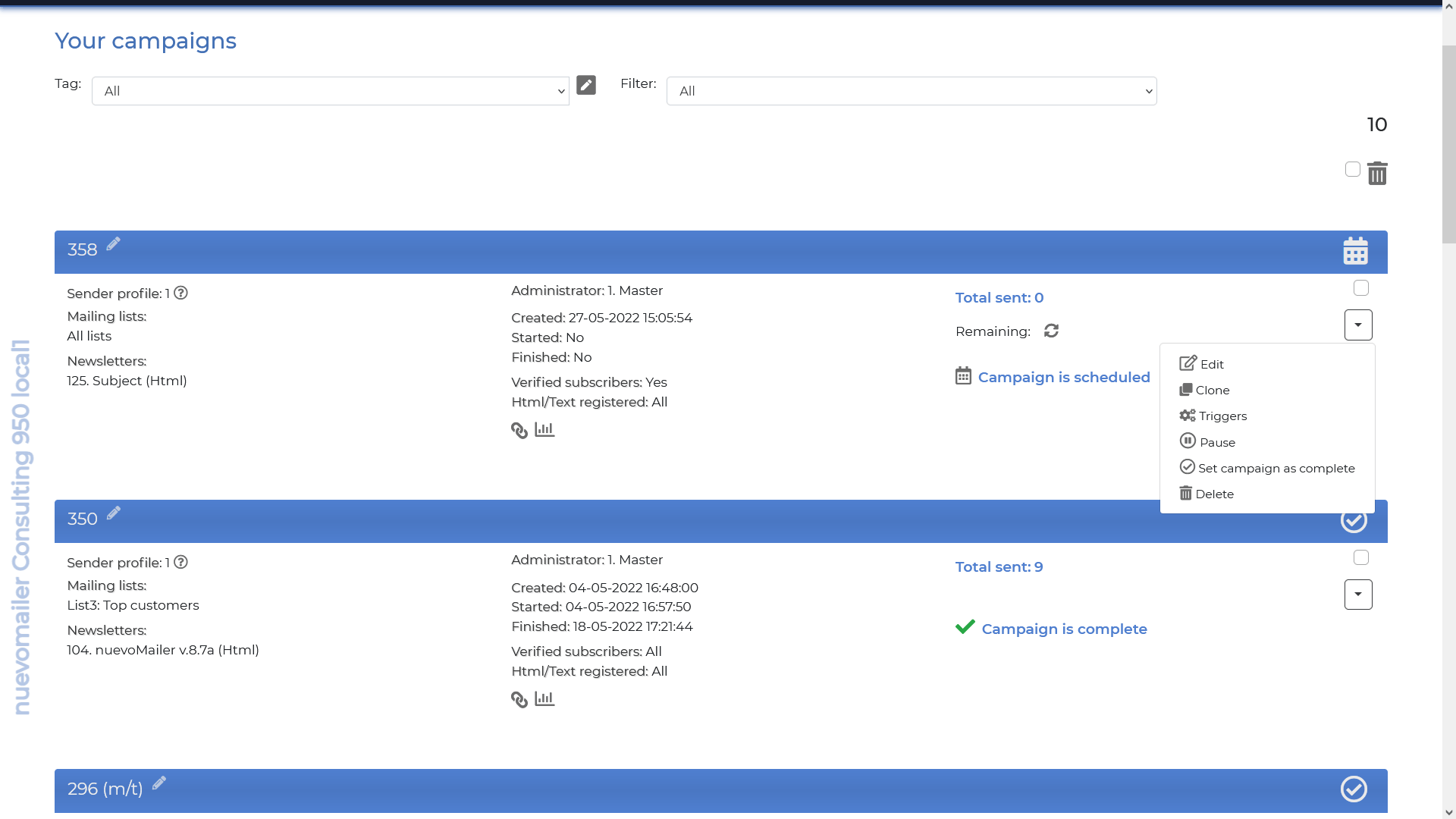
You can send your campaigns manually (window pop-up) or schedule them to run in the background using cron.
You can pause, resume, make changes (even to a running) campaign. You can apply different batch settings to each campaign (example: send x emails, pause z minutes and start again).
You have several sending methods available including SMTP, PowerMTA, Amazon SES, your local MTA, Mailgun, Sendgrid and a lot more.
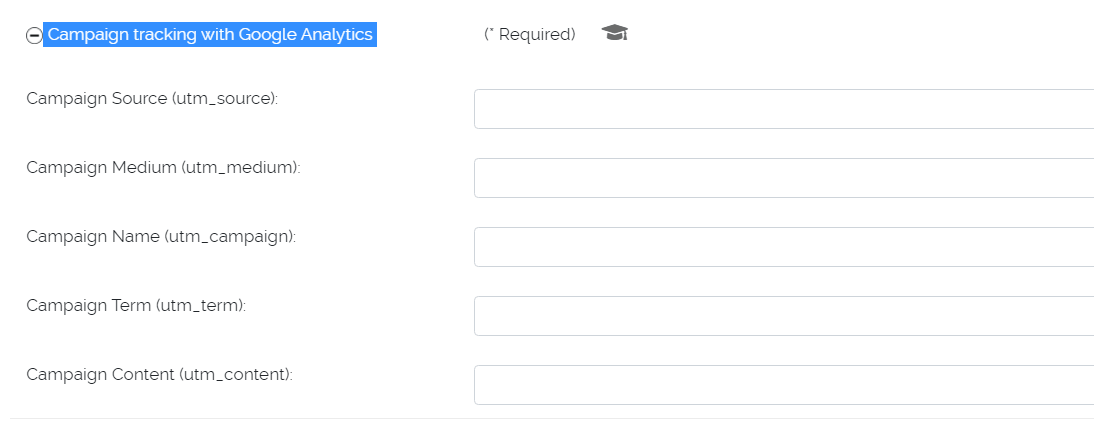
Besides the internal tracking mechanisms of nuevoMailer you may use Google analytics campaign tracking. nuevoMailer automatically parses your newsletter hyperlinks.
You can further segment your recipients using the subscriber tags and mailing filters.

 Products
 .com
.com